Quick answer: A crack after a paddle clash is often only cosmetic. If it marks just the surface or the edge guard, you can usually keep playing in rec games. If the face feels soft, sounds dull or the ball suddenly jumps off it, the core may be damaged or the paddle may be delaminated, and it is time to replace it. These checks can flag a change in the paddle. They cannot confirm its internal condition or tournament eligibility. For sanctioned tournaments the bar is stricter: under the 2026 USA Pickleball rulebook, a crack that breaks the hitting surface makes the paddle illegal (Rule 3.D.5.a).
In this article
- What Is a Delaminated Pickleball Paddle?
- Keep, check or replace: the decision in three rows
- Cosmetic Crack vs Real Damage (The Important Difference)
- The 60-Seconds Paddle Test You Should Do After a Clash
- Can You Keep Playing Pickleball With a Cracked Paddle?
- Should You Repair It or Replace It?
- Will the Warranty Cover a Paddle Clash?
- How to Prevent Paddle Clashes in Doubles
- Cracked Pickleball Paddle FAQ
- Conclusion: Why Modern Paddles Crack After Clashes
Paddle clashes are common in doubles, especially when both partners go for a ball down the middle at the kitchen line.
Most picklers rush to buy a new paddle once they see a crack on the paddle. Honestly, in a lot of cases the damage is just cosmetic, and it doesn’t affect the performance of the paddle.
So before you rush and browse for a replacement, let’s see what you are actually dealing with.
A couple of simple things can tell you a lot.
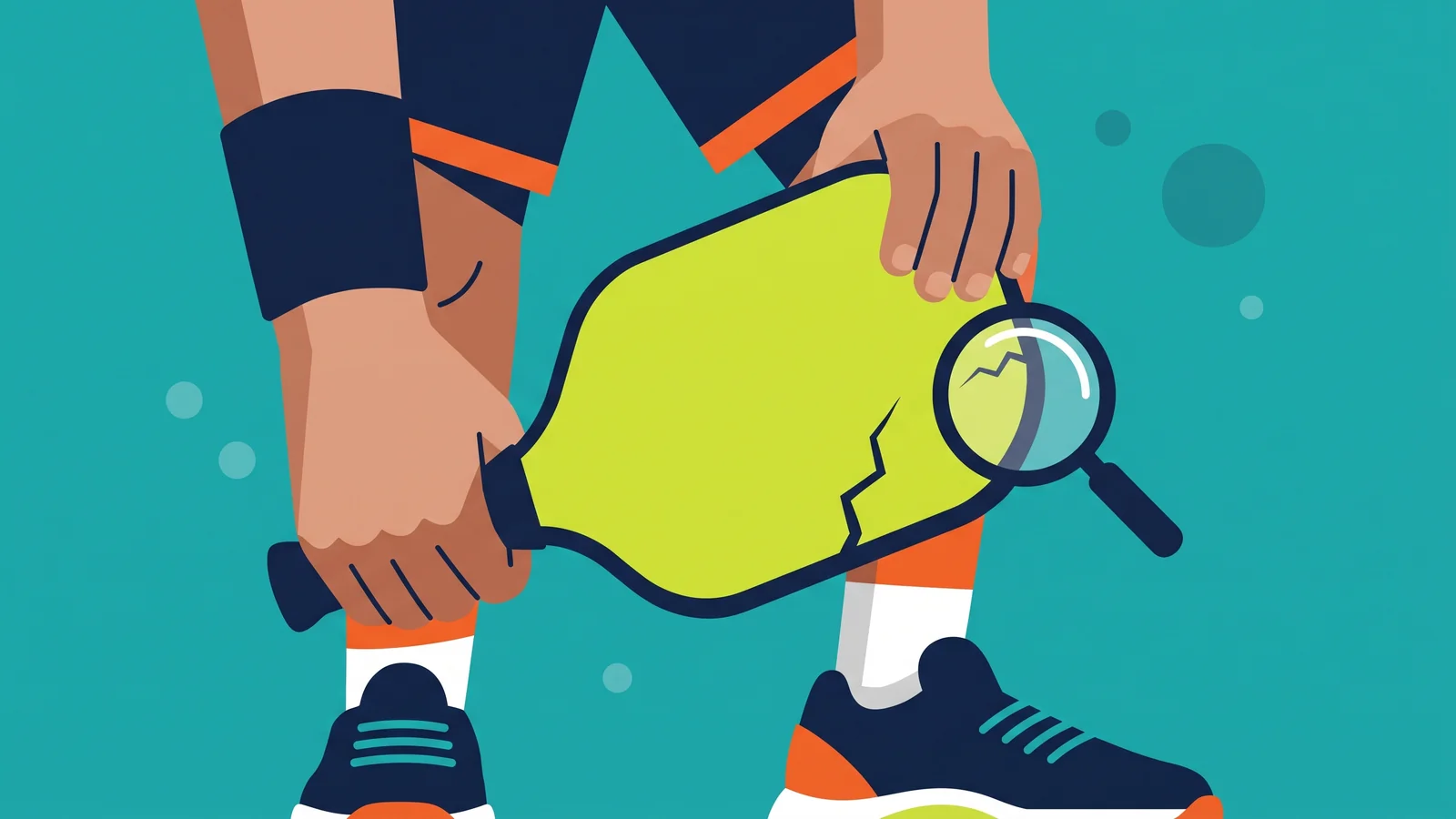
What Is a Delaminated Pickleball Paddle?
A delaminated paddle is where internal layers of Pickleball paddle have started separating from each other. As there are multiple layers of every paddle, sometimes the bond holding them together weakens or breaks down. So those layers start coming apart.
And this is different from a simple crack. Delamination is separation between bonded layers, such as the face pulling away from the core. A crushed core is a different problem: the honeycomb inside is dented or broken while the layers may still be bonded. Both are structural damage. The paddle starts feeling soft or spongy. The ball might bounce off with more power than expected. The PPA Tour explains this as a trampoline effect: once the face separates from the core, shots can come off faster than normal, which is a safety problem when players stand close at the net.
So what actually causes it?
The hard impact or paddle clashes are common reasons. But it can also happen due to regular wear and tear, heat or cold, or moisture.
The signs the PPA Tour lists are a hollow or dull sound, soft spots when you press the face, peeling or bubbling, an uneven surface and sudden extra pop on drives. A delaminated paddle is generally not considered repairable, so you should start looking for a replacement immediately.
Keep, check or replace: the decision in three rows
| What you see | What it likely means | What to do |
|---|---|---|
| Superficial scuff or edge-guard mark | Cosmetic. The hitting surface is not broken. | Keep playing in rec games and watch it. Edge guard tape is allowed (Rule 3.D.6.a). |
| Suspected face separation or core damage (soft spot, dull sound, sudden extra pop) | Possible delamination or a crushed core. Structural damage. | Stop relying on the paddle and contact the manufacturer about the warranty before you modify it. |
| Visible break in the hitting surface | Not legal for sanctioned play (Rule 3.D.5.a). | Do not use it in tournaments. Replace it, and check the warranty with the manufacturer. |
Cosmetic Crack vs Real Damage (The Important Difference)
The first thing picklers do after paddle clash is to flip it over and stare at it. They try to deduce whether it’s still good or start browsing amazon by the end of the session.
Here’s the good news. Not every crack is a death sentence for your paddle.
Most of the time the damage is cosmetic, meaning the small crack might only be breaking through the outer surface layer. If the core is untouched, you can usually keep using it.
Another type of damage you might come across is edge guard damage. It can occur when the two paddles collide or your paddle goes too low while returning a shot that it brushes too hard against the ground. The edge guard’s job is to absorb the impact. A little crack or chip on the edge guard usually has no effect on how the paddle plays.
So what type of damage is serious?
What you can really call concerning is core damage.
Most pickleball paddles have a honeycomb-style core inside. That’s where all the performance, feel and responsiveness of the paddle resides.
The damaged internal structure or the one that starts to separate, directly impacts the performance of the paddle. You’ll know it when shots are lacking the pop, the sweet spot almost disappears and the spin goes inconsistent.
So instead of discarding the paddle the moment you see a crack, look for the clues above. Hit a few balls with it, then decide.
The 60-Seconds Paddle Test You Should Do After a Clash
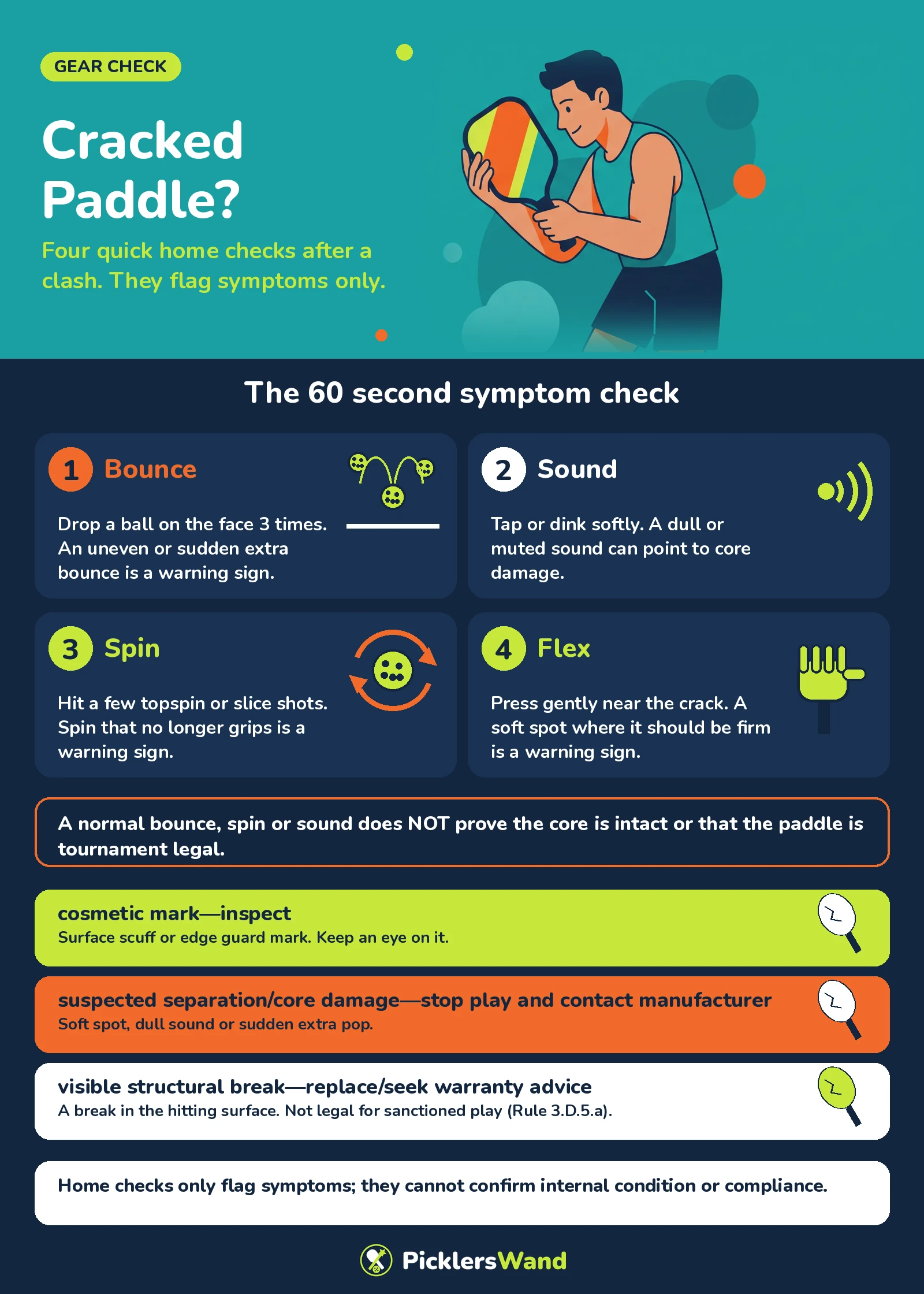
Right after paddle clash instead of staring at the paddle and thinking how bad the crack is, here are few tests that will only take 60 seconds and help you determine the condition of your paddle.
- Bounce Test: Drop a pickleball onto the paddle face from short height. Repeat it 3 times and observe the bounce. Does it feel normal and consistent? An uneven or sudden extra bounce is a warning sign.
- Sound Test: Hit a few soft dinks or gently tap on the paddle face. You should hear the crisp pop you are used to. If it sounds dull or goes mute, the core might be affected.
- Spin Test: So this one is for those who can actually play spin shots. Hit a couple of topspin or slice shots and see whether the ball still grips and spins like it did before.
- Flex check: The last one and the quickest one. Gently press near the cracked area with your thumb. It should feel firm. A soft spot where it should not be is a warning sign.
Here’s the takeaway: don’t rely on only one test. Run them all and compare with how the paddle felt before. These checks can flag a change in the paddle. They cannot confirm its internal condition or tournament eligibility.
Can You Keep Playing Pickleball With a Cracked Paddle?
After spotting a crack and running above tests most of the picklers still need a straightforward answer to one question: “Can you still play with the paddle or you need a new one?”
In rec play the answer is usually yes, if the crack is small and has only affected the surface or the edge guard. Many players keep using a paddle like that without trouble.
When you feel that your paddle has suddenly lost the power on the drives, losing the spin, the sound when the ball touches the paddle is dull, that usually means it’s time to replace it.
Another thing to note here is cracks don’t stay of the same size. Regular use of a paddle can spread the crack slowly deep into the structure, worsening its performance. The change might be gradual until you notice it.
For rec games, a slight crack on the paddle is fine.
Should You Repair It or Replace It?
Honestly, most of the pickleball paddles aren’t built to be repaired. But that doesn’t mean you keep that crack open. For minor edge guard cracks you can use super glue, epoxy or tape to hold it together. Edge guard tape is one of the alterations the rulebook allows (Rule 3.D.6.a). Glue is not on that list, and Selkirk’s warranty, for example, excludes user modification, so check your warranty before you glue anything.
If the damage is purely cosmetic, then such a fix can stop crack from spreading and your paddle will last longer.
If you play sanctioned tournaments, the rule is clear. The paddle’s hitting surface must not have holes, cracks, delamination or indentations that break the paddle skin or surface (Rule 3.D.5.a), and in refereed matches the referee inspects paddles before play starts (Rule 17.C.1). So a face crack you would ignore in a rec game can keep the paddle out of a tournament. Delamination, explained above, is the more serious version.
Will the Warranty Cover a Paddle Clash?
Eventually everyone comes across this question. Sadly in most cases, brands don’t cover the paddle clashes.
Paddle warranties are written for manufacturing defects. JOOLA’s warranty says it does not cover accidents or abuse, and Selkirk’s lifetime warranty excludes abuse, user modification and chips on edgeless paddles. A clash is an accident, not a defect.
So if you are thinking about claiming warranty, it is likely going to get rejected, especially when there are obvious signs of impact on the paddle.
A claim has a better chance when the problem looks like a manufacturing defect, for example delamination with no sign of impact or an edge guard that comes loose during normal play.
Even after a clash, it is worth contacting the brand and asking politely, especially if the paddle is fairly new.
How to Prevent Paddle Clashes in Doubles
If your paddle is cracked due to a paddle clash, then there’s a chance that it won’t be your last. Especially if you’re regularly playing doubles. The majority of the players think that clashes are just freak accidents. But it is also true that these clashes often happen when the ball is landing in the middle.
A common doubles guideline is “forehand takes the middle”. Since the forehand generates stronger and more controlled shots, it shouldn’t be hard to remember.
This one simple rule removes that split-second hesitation and makes a decision for you.
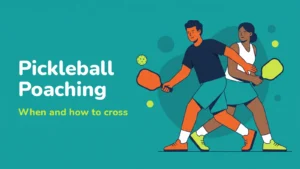
Another thing you can do is communication during the game. Calling “mine” or “yours” early helps to reduce confusion with your partner. Agree with your partner on when to poach, too; our guide to poaching etiquette in pickleball covers it.
Many paddle clashes happen right at the kitchen line. The reason: that’s where the game speeds up most and reaction time goes down. When the ball is coming fast and you have to decide in second, the chances of clashing paddle with your partners go up.
Define your area of control by keeping clear spacing between both of you. With a bit of experience you will naturally develop the awareness of the space around you and your partner without even thinking about it.
Cracked Pickleball Paddle FAQ
Can I still play with a cracked pickleball paddle?
In rec play, usually yes, if the crack is only on the surface or the edge guard. Replace it if the face goes soft, sounds dull or hits with sudden extra power. The bounce, sound and flex checks can flag a change, but they cannot confirm the paddle’s internal condition or tournament eligibility.
Is a cracked paddle legal in tournaments?
Not if the crack breaks the hitting surface. Rule 3.D.5.a of the 2026 USA Pickleball rulebook bans holes, cracks, delamination or indentations that break the paddle skin or surface.
Can you repair a delaminated pickleball paddle?
No. Delamination is a separation inside the paddle, and the PPA Tour says it is generally not considered repairable. Glue or tape can only hold a loose edge guard.
Does a warranty cover a paddle clash?
Usually not. Warranties such as JOOLA’s and Selkirk’s cover manufacturing defects and exclude accidents or abuse, but a polite request to the brand costs nothing.
Conclusion: Why Modern Paddles Crack After Clashes
Most of us mistake the high price of paddle cost with longevity. Although that seems fair, that’s not how modern Pickleball paddles are built. Today’s paddles are built for performance first. And for that purpose, manufacturers use the materials and methods that aren’t meant to absorb hard impacts or paddle to paddle collisions.
Take carbon fiber for an example. The market is full of these types of paddles today because it generates great spin and is responsive which is what players love. But a thin face can still crack when it takes a hard hit from another paddle.
A lot of newer paddles are designed thinner and more responsive for the game but these don’t absorb the sudden hard impact due to clash resulting in crack.
Paddle clashes are common, especially in doubles. Product pages mostly talk about spin, power and feel, and what happens after a clash usually only shows up in the warranty terms.
It’s a trade-off, a high-performance paddle might feel incredible out on the court, but it’s not designed to handle repeated collisions.
Keep that in mind and a crack after a clash won’t feel like some defect or failure.