Here is one of my favorite parts of the game: the dink shot. If you’ve ever watched a skilled player dominate the kitchen line with precise, well-placed dinks, you know what I mean—it’s mesmerizing.
When I first started playing pickleball, the term “dink” made me scratch my head.
Was it a fancy move? A specific type of shot? It felt like everyone around me knew something I didn’t.
And, like many beginners, I thought hard drives and fast-paced rallies were the key to winning.
Well, I was wrong.
Over time, I learned that the dink shot is a master strategic weapon.
In this article I’ll help you understand the dynamics of dink shot and ways to master it.
Whether you’re just starting or refining your technique, this guide will walk you through everything you need to know about DINKING.
What is a Dink Shot?
A dink shot is a soft, controlled shot that just clears the net and lands in your opponent’s kitchen—the Non-Volley Zone (NVZ).
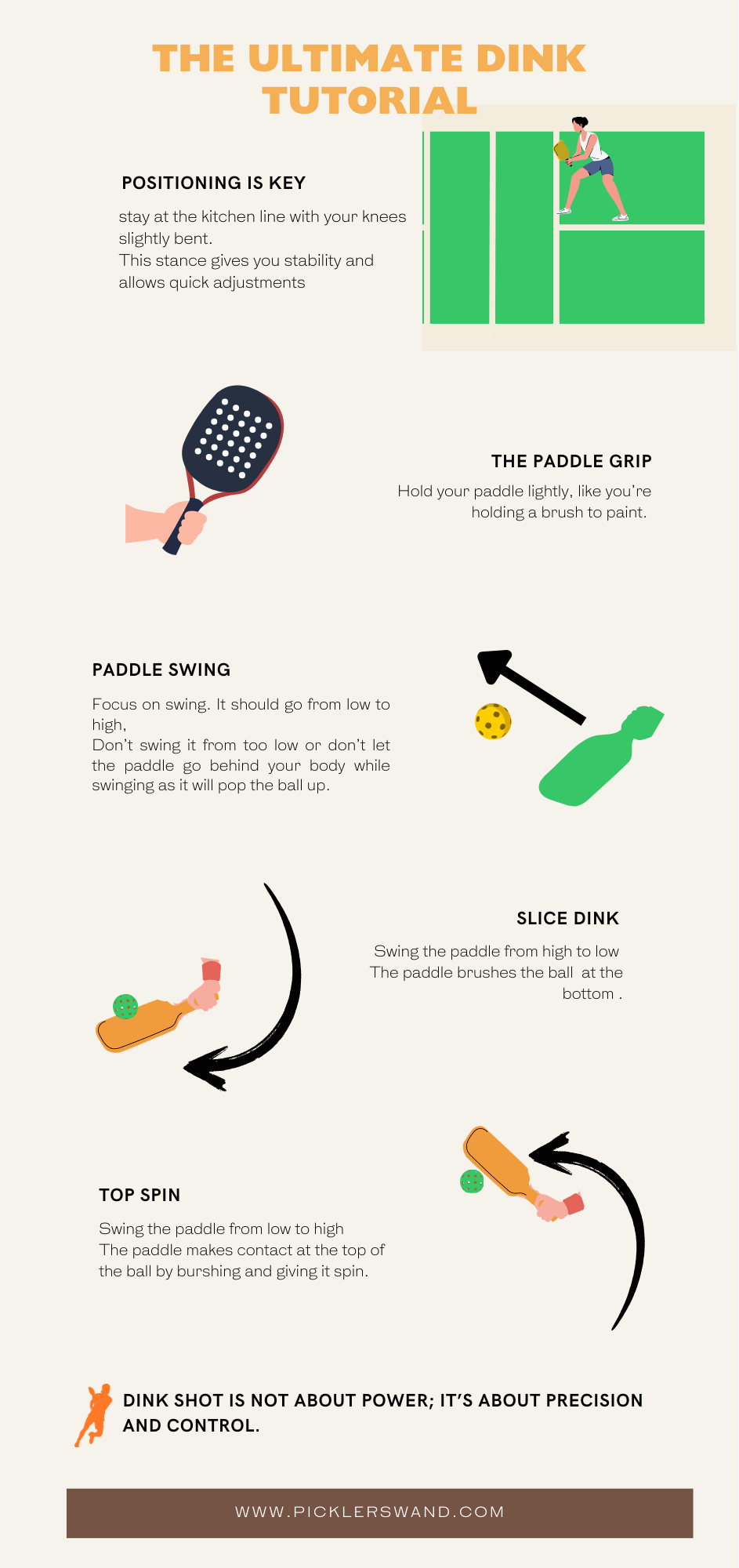
“Dink shot is not about power; it’s about precision and control.”
When Executed well, a dink shot slows the game, forcing your opponent to return a challenging low ball.
It’s a way to reset the pace, create opportunities for scoring, and—let’s be honest—sometimes frustrate your opponents.
Why Is the Dink Shot a Game-Changer?
When I first started playing pickleball, I thought smashing the ball hard was the only way to win. But as I refined my game, I realized that mastering the dink shot was an essential winning strategy. Here’s why:
- It Controls the Pace: Dinking slows things down, giving you time to reset and strategize.
- It Forces Errors: A well-placed dink makes it harder for your opponent to return an aggressive shot.
- It Builds Consistency: Practicing dinks sharpens your touch, footwork, and overall game control.
How to Execute the Perfect Dink
When I first started practicing dinks, I made every mistake in the book. My shot would either go too high or end up on the side of my team after hitting the net. After embarrassing myself through this initial phase of trial and error, I found the techniques that worked. Here’s what I’ve learned:
1. Positioning is Key
- Always stay at the kitchen line with your knees slightly bent. This stance gives you stability and allows quick adjustments.
- Stay ready to move; pickleball is all about adaptability.
2. The Paddle Grip
- Hold your paddle lightly, like you’re holding a brush to paint. A tight grip leads to overpowered shots, which defeats the purpose of a dink.
3. The Stroke
- Keep your paddle head above your wrist to avoid over-relying on wrist action.
- Use a smooth, linear motion to guide the ball, and aim for your opponent’s feet or the kitchen corners.
Advanced Dinking Tips that improved my game over the years
As I transitioned from lower rankings to higher ones, refining my dinks proved to be a game-changer. Here are some advanced techniques that helped me level up
1. Paddle Position Matters:
Keeping the paddle face up will improve the consistency while playing defensive. You are less likely to commit errors in your shot selection.
For offensive shots, keep the paddle facing downward.
2. Adjust Your Trajectory
Early on, I relied on exaggerated low-to-high swings. Swinging the bat from too low will bounce the ball uncontrollably. Further it increases the chances of you losing the point giving edge to your opponent.
Switching to a flatter, more controlled motion helped me land offensive dinks.
3. Hit the ball in the air whenever you can:
While dinking most players make this mistake of stepping back and forth to hit the ball.
Too much footwork in back and forward direction will create opportunities for the opponent to score against you. Instead, try to hit it in the air. This will help you to maintain your position at the kitchen line and sustain the cadence in the game.
4. Make use of Top Spin & Slice dinks effectively
Top spin: It is an aggressive shot played swinging the paddle from low to high and brushing the ball at top.
Slice dink: It is just opposite- swinging the paddle from high to low and brushing against the ball at the bottom.
Playing the actual Dink shot
Imagine the ball represents the clock with top representing 12 o’clock and bottom 6 o’clock.
Keel in mind you have to keep Paddle face downward for hitting a Top Spin.
When you are hitting a Top Spin dink, the paddle should swing from down to up and brush against the ball at 12 o’clock.
This shot will enable the ball to bounce on the ground and hit up pushing the opponent back.
For Slice dink open paddle face & swing the paddle from high to low and brush the ball at 6 o’clock. This shot will push the ball backward and the ball will remain low in the opponent’s area.
It can be used effectively to reset the momentum of the game.
Top Spin can be used as aggressive dinks whereas slice dink is used for offensive dinks.
Dink shot is a strategic weapon. Learn to use it effectively and it will certainly refine your skills and enhance the game.
Hope you have enjoyed reading this article. Stay tuned for more advanced tips by connecting with our community.
I would love to hear about your experience with dink shots in the comment section.