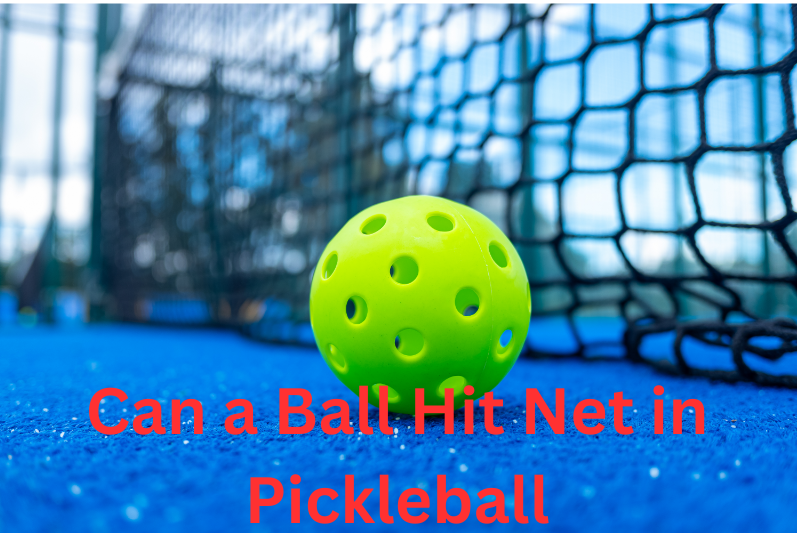
The ball hitting the net during the game has caused more arguments in Pickleballs than any other faults.
All you need to place a soft dink shot touches the top of the net and the ball rolls over to the other side. And everybody starts arguing on whether it’s a fault or not.
Here’s what you need to keep in mind on court:
“When the ball hits the net during a game of pickleball, it is not automatically a fault.”
It’s not really complicated to understand. The real problem is that many of the Picklers assume it is “fault” as they have been carrying it in their head from Tennis games they watched or someone once told them about it. Some players think net = ends the point some others say the shots are to be replayed.
These things happen especially during rec games or casual plays, where there is no referee on the court.
With this article, we’ll break down this rule and by the end you’ll know ‘when it’s legal after the ball hits the net”. So next time you face such an argument in court, you can confidently explain it without guessing anything.
Because pickleball should be about playing points—not debating them.
Short Answer
Yes. The ball can hit the net in pickleball and still be legal.
Unlike Tennis, in Pickleball point is not based on whether the ball touches the net, but on what happens after the contact.
Therefore even if the ball hits the net, it has to cross the net and land in the correct area of the court.
That single sentence answers most on-court arguments.
There are two common situations when it is considered legal
- During rally the ball clips the net and still lands inbound, the rally continues without fault
- If the serve hits the net and lands in the correct service box, it is legal and play continues. The ‘let serve’ rule is no longer followed in Pickleball.
Anything other than the above two scenarios, is pretty much ‘fault’.
In simple terms,
“It’s the landing of the shot that decides the result.”
Keep that in mind.
Why This Rule Confuses So Many Pickleball Players
If the rule is so simple then why are so many Pickleball players confused?
A big part of confusion comes from Tennis where ball contacting the net has consequences. Many players call a fault before they even think about it.
Some of the Picklers are still carrying old rules. Let serve was part of the official rulebook earlier in Pickleball where serves were replayed. But that rule has been removed officially, however the old rule is deeply rooted in the club culture so every now and then you’ll find people arguing about it in court.
As a result, this simple rule confuses so many players.
Can the Ball Hit the Net During a Rally?
Yes. During a rally, the ball is allowed to hit the net.
The net is irrelevant as long as the ball completes landing in the right area. So even if the ball touches the net, crosses over and lands inside the opponent’s court, the rally continues.
This applies even when the soft dink clips the net and drops on the other side by just clearing it. These shots are often called net cord balls. These may feel unfair and annoying but these are completely valid.
Rally ends when the ball lands out of bounds or on the same side of the player. So the ball touching the net is not a problem, where it lands is.
Does net movement due to wind make any difference?
Net movement caused by wind doesn’t change anything.
Can the Ball Hit the Net on a Serve?
Yes.
This is when people start confusing it with the infamous ‘let serve’ rule.
Let serve is no longer part of the official rulebook of Pickleball. The Picklers who learned the game at different times often argue on this rule.
Just like rallies, remember if the serve hits the net and still lands in the correct service box, the serve is legal and play continues. No let serve, no replay.
So if the serve hits the net and lands out of bounds or into the kitchen, it’s a fault.
Many rec games still follow the ‘let serve’ rule. So you should clarify this rule before starting any rec game.
Net vs Net Post
Even though net and net post are part of the same structure, they are treated as separately as per rules.
The moment the ball hits the net post, the point is over. Even if the ball rolls into the court, the contact with the net post is treated as a fault.
So you need to be careful during rallies, especially during wide crosscourt shots. When it comes to post and ball contact, the end result doesn’t matter. The contact itself is at fault.
Portable & Temporary Nets
Most net arguments don’t happen in the permanent Pickleball ready courts, they happen on courts with portable or temporary nets, these are the kind mostly used by rec players.
These nets look simple, but they come with extra parts that matter a lot when the ball makes contact.
A portable net system comes with a support system to hold it together. It consists of a center strap, a horizontal support bar and a base frame. These parts are not considered as net.
If the ball hits the center strap or horizontal support bar and then goes over, it’s a fault. Even if the ball crosses to the other side, contact with any of the support systems ends the point. It applies even if the ball clips the base frame or any support.
Then there are sagging nets to add to confusion. Some courts have them drooping low enough and a hard shot can cause the ball to pass underneath and land on the other side without touching the net. Sadly that is called a fault.
In simple words, the ball should pass over the net and the contact with “actual net” counted as net contact.
When Is a Replay Allowed?
In Pickleball, replays are only offered as exceptions.
The replays are offered when something outside the normal flow of the game affects the point.
For example,
- A ball from another court rolls on your court during a rally.
- A player or object intrudes in a way clearly distracting the play.
What is not considered as interference?
- Wind shaking net is not interference.
- The net vibrating due to the previous shot is not interference.
A good rule of thumb to remember:
If the rally ended because of the shot itself, the point counts. A replay may be allowed, if it ended because something external interfered.
How is this useful for you on court?
You’ve now reached the most important part. Knowing the rule is useful but explaining it without arguing on the court will give you an edge.
Most arguments are the result of someone’s ego being hurt because they are corrected in public. While explaining the rule, tone matters more than accuracy.
Keep your voice calm and avoid sounding authoritative.
Use phrases like,
- “Net contact is okay as long as it lands in”
- “There aren’t let serves anymore”
If a ball hits the center strap or support bar say
- “That part isn’t considered the net”
When nothing works the best phrase you can use is
- “I’m fine playing it either way,”
This ends all the arguments without going into heated debate.
Official Net Contact Rule Simplified
The official rulebook is designed for officials, so the language used can be confusing for casual players.
Here’s what official rule says in simple language:
A shot is legal if the ball crosses the net correctly and lands in the proper area. Whether the ball touched the net on the way over doesn’t matter.
This applies during rallies and on serves. In both cases, net contact alone is not a fault.
FAQs related to Common Net Questions
Q1. Is it legal if the ball hits the net and goes over in pickleball?
Ans: Yes. If the ball lands in the correct court after hitting the net and crossing over it, the shot is legal.
Q2. Is the ball hitting the net on a serve considered as legal?
Ans: Yes. A serve that clips the net and lands in the correct service box is legal.
Q3. Are let serves still replayed in pickleball?
Ans: No. The Let serves rule is removed from Pickleball.
Q4. What happens if the ball hits the net post?
Ans: That’s a fault. Contact with the net post or support system in case of temporary nets, ends the point even if the ball lands inbound.
Q5. Is there a separate net contact rule in doubles versus singles?
Ans: No. Net contact rules are the same in singles and doubles.
Final Takeaway
You don’t need to memorize the official rulebook.
You just need to understand how the rule is meant to work in the game.
Once you understand it clearly, you’ll stop focusing on net contacts and more on actual game. And that’s exactly where pickleball is meant to be enjoyed.
So next time the ball contacts the net or anything you can go ahead and explain the rule without guess work and arguments.