Pickleball is often labeled as a “simple” game and sure, it’s easy to pick up. But play for five minutes against someone who knows how to use spin, and you’ll start questioning your life choices.
Suddenly, the ball’s kicking sideways, dropping like a rock, or refusing to bounce at all. Spin changes everything.
If you’re tired of watching your shots going long or bounce predictably into your opponent’s strike zone, it’s time you learn the art of spin control.
Here’s how to actually do that properly instead of hoping for magic.
How to Use Spin in Pickleball
Spin isn’t just for instagram reels, if mastered it’s strategic weapon.
The spin shot can create weird bounces, mess with the timing making your opponent look silly.
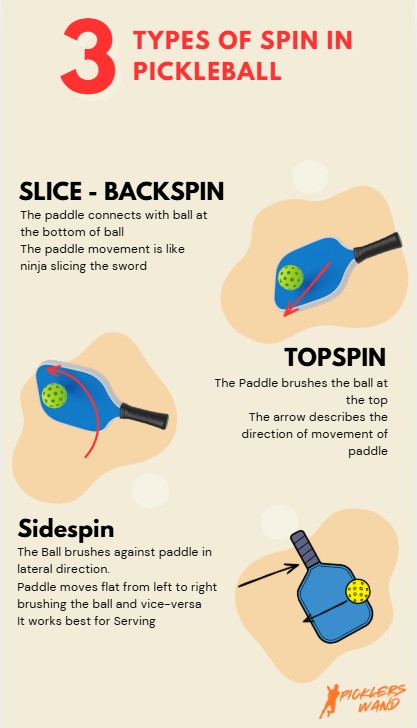
What are the different types of spins in Pickleball?
- Topspin: It enables you to swing harder resulting in the ball diving dip after crossing the net.
- Backspin (Slice): It slows the ball and keeps it low. It can be used for resetting the pace of the game, during dinks, or just for irritating your opponents.
- Sidespin: This classic spin pulls the ball left or right in the air by adding the bounce. It can be used effectively especially on serves and drops.
When you understand spin, you don’t just play harder, you play smarter.
1. Find The Right Grip
Let’s start with the paddle grip. Your grip determines how easily you can execute spin.
- Eastern or Semi-Western Grips: These are your go-tos for hitting topspin. They naturally position your paddle to brush up the ball.
- Continental Grip: The old faithful of versatile grip. The continental grip is great for slicing, lobbing, and soft game shots. However ideal if you’re trying to rip heavy topspin.
Pro Tip: If your shots are flat and lifeless, try loosening your grip pressure. A tight grip significantly limits the wrist action.
2. Hitting Topspin
Topspin is your safety net and your pressure cooker, it lets you hit harder and keeps the ball in play giving your opponent a hard time. It’s not as complicated as it sounds, let me break it down for you even if you are a beginner you’ll grasp it easily.
1. Start Low, Finish High
Think of it like brushing up the back of the ball. You’re not just hitting through it, you’re lifting it. Start your paddle low, and as you swing, move it up and forward. That “brushing” motion is what makes the ball spin forward.
2. Tilt Your Paddle Forward (Just a Bit)
Don’t keep the paddle flat. Hold it with a slight downward angle, this helps you grab the back of the ball better and create that rolling action over the net.
3. Hit in Front of Your Body
If you hit the ball too far behind or too close to your body, you lose control. Get into position early so you can meet the ball just out in front, that’s your power zone.
4. Let Your Swing Flow Upward
After contact, don’t just stop. Let the paddle continue upward and across your body, this follow-through is what locks in the spin.
Pro Tip: Imagine you’re petting a cat from tail to head, gentle but firm upward motion. That’s the kind of touch and direction your paddle needs.
Topspin makes your shots dip faster and bounce weird for your opponent, giving you control and making you look smooth as hell on the court.
Try This Drill: From the baseline, drive topspin shots and focus on making them arc up, then dip down hard before the baseline. It’s weirdly satisfying.
3. Backspin
Backspin is gentle and at the same time super annoying when it stays low and dies before anyone expects it.
Let’s say a backhand slice is a way to control the ball. The ball remains low and your opponent finds it hard to attack.
It looks easy, and when done right, your opponent will be frustrated.
Here’s how to execute it, nice and simple:
1. Hold Your Paddle Like You’re Shaking Hands
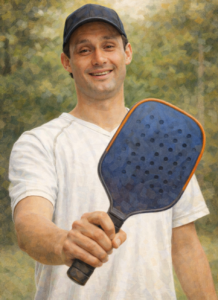
Use the continental grip, think of it as a handshake grip. See in the image below
Image here
It gives your wrist just enough freedom to slice clean without flipping the paddle around.
2. Position Paddle Face Slightly Up
Don’t keep your paddle flat. Tilt it slightly upward this helps to create a smooth motion that gives you backspin.
3. Swing High to Low, Smoothly
Start high like shoulder or chest height and bring the paddle down and forward in one motion.
Don’t perform a samurai style chop. Remember you only need to gently shave off the bottom of the ball.
Drill: Practice drawing a check mark in the air with your paddle.
4. Make Contact in Front
To execute a controlled spin don’t wait for the ball to come into your body, step in and hit it just in front of you.
5. Finish Low and Balanced
After you slice, let your paddle finish low and forward. No need for a big follow-through. This is just enough to complete the shot and keep your balance for the next shot.
Master this, and your opponent’s gonna hate how your shot just dies instead of bouncing up nicely to their paddle.
Backspin is perfect for defensive plays, drops, or when you just want to slow down the rally and to gain control.
Remember these:
- High-to-Low Motion: You’re shaving the underside of the ball.
- Slight Paddle Tilt: Open the face a little, but not so much it turns into a lob.
- Soft Hands: The grip should be enough to guide the ball.
The backspin is best used with Third shot drops, resets, and when you want your opponent to bend awkwardly at the knees and mutter something unprintable.
4. Sidespin: Master This And You Are The Winner
Most players ignore sidespin. But if you want to be the winner, don’t be that person.
The moment you learn to curve a serve sideways, you’ll become unstoppable. Here’s how to sidespin a shot
Use lateral brush technique, it’s easy to understand and learn. For right-handers, brushing left-to-right on the ball adds rightward spin (and vice versa). In the beginning you might end up hitting the ball out of the court but once you get it, it’ll be an addictive move.
Check out this short video. I don’t think words can explain any better than this one
How To Spin Your Pickleball Serve #pickleball – YouTube
Use It on Serves: Especially if your opponent’s footwork is suspect. Make ’em move.
5. Your Paddle Matters More Than You Think
Yes, technique is king. But if your paddle is too smooth, you won’t be successful. Here’s what I personally recommend to every Pickler is to buy textured paddles. As more grit equals more spin. Go for carbon fiber and raw carbon surfaces as they are excellent for purpose.
If you go for smooth paddles, it’ll be easier on the control front, but they won’t help you to spin the ball.
Tip: If you play regularly and want to develop your spin game, Invest in good paddle that can actually turn the ball.
6. Ball and Weather
The cold weather makes balls dead and grumpy. Spin is harder to generate and control. On the other hand the warm weather gives more bounce and more spin pop.
Plan strategies accordingly. If you don’t be prepared to yell at the sky like the rest.
Here’s what I would suggest the Picklers for finding right balls
If you are looking for Outdoor Balls go for harder balls like the Dura Fast or Franklin X-40 they are spin-friendly.
For Indoor Pickleball games go for softer, slower, and less likely to reward your spin moves.
Final Thought
With more and more players adding the spin tactics In Pickleball it has become psychological warfare. Either you learn it or be ready to be thrown out of the court early.
Master the spin and watch your opponent hesitate. That’s when you’ve won not the point, but the mental edge.
So yeah, power is cool. But spin? Spin is mind control.
Got a favorite spin move? Share it in the comments below.